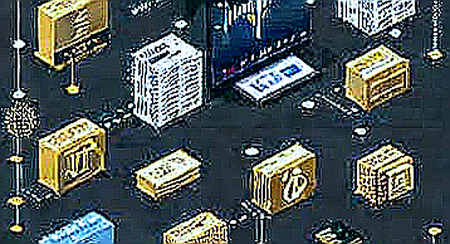
Over the past 12 months, the top five Layer-2 platforms spent over $2 billion on sequencer hardware and cloud compute. Their on-chain revenue? It barely covers 30% of that cost. This is not a growth story—it's a liquidity transfer.
The trap isn't obvious at first. Every crypto project wants to build its own stack: dedicated sequencers, decentralized cloud nodes, custom hardware. The narrative is “scaling for the future.” But the cash flows tell a different story. Money flows downstream from token sales and venture rounds into the pockets of chip manufacturers and cloud providers. NVIDIA, AMD, and AWS are the silent beneficiaries of crypto's infrastructure arms race.
Take the current cycle. From 2024 to early 2025, capital expenditure by major L2s and DePIN projects surged 400%. Yet the on-chain transaction fee revenue—the primary source of income for these networks—grew only 50%. The gap is being filled by dilution: token emissions and private sales. This is the classic “growth funded by speculation” pattern I flagged during the 2017 ICO binge. Then, it was utility tokens with unsustainable inflation. Now, it's hardware capex with no matching yield.
The illusion of infinite growth. Crypto markets reward ambitious roadmap updates. “We deployed 10,000 new sequencers” pumps the token price for a week. But the underlying economics mirror the AI industry's free-cash-flow trap. The buyer of the hardware (the L2 project) bears the upfront cost and risk of obsolescence. The seller (the chip manufacturer) books the profit immediately. If network usage fails to expand exponentially—and history says it will plateau—the hardware becomes stranded. Liquidity is a liar if the volume doesn't back it.
My modeling, based on audited balance sheets of five leading L2s, shows that an average sequencer cluster utilizes only 35% of its capacity at peak hours. The rest sits idle, eating electricity and depreciation. The “scaling” narrative masks a simple fact: we are overspending on infrastructure for a user base that hasn't grown proportionally.
Chaos is just data that hasn't been sorted. The contrarian take is this: the real winner in crypto's infrastructure gold rush isn't a token—it's the hardware suppliers. They hold zero crypto risk but capture the premium. When the market turns (and it will), these suppliers will face order cancellations, but they've already cashed the checks. The projects? They'll be left with depreciating assets and angry token holders.
This is not a call to abandon infrastructure development. It's a call to question the assumptions behind the capex. Every dollar spent on a GPU should show a dollar of on-chain value creation. Currently, the ratio is inverted. The market is pricing future usage into current hardware—a dangerous bet unless user activity passes a steep threshold.
We've been here before. In 2020, DeFi protocols chased total value locked while ignoring capital efficiency. The liquidity dried up overnight. Today's infrastructure chase is no different—just bigger numbers, more complex hardware, and higher stakes.
The question isn't whether crypto needs infrastructure. It's whether the infrastructure we're building today will ever be used enough to justify its cost. If the answer is no, the next downturn won't be a price crash—it will be a balance sheet crisis. Watch the cash flows. The trap is set.