Five explosions in Yazd. US-Israel strikes on Iran’s nuclear sites. The headline broke on Crypto Briefing — a niche outlet for digital asset traders, not military intelligence. But the signal is loud. And the market has already started pricing it. Not in crude oil futures. Not in gold. In prediction contracts. Polymarket’s "Iran regime collapse by 2026" sits at 9.5% YES. That’s the volatility the crowd ignores. I see a leveraged liability.
Context
Yazd is not a random desert city. It hosts the Saghand uranium mine — the front end of Iran’s nuclear fuel cycle. The bomb that hits a mine is different from the bomb that hits a centrifuge cascade. It’s a supply-chain play. Cut the ore, starve the enrichment. The strikes targeted upstream infrastructure, not just high-profile facilities like Natanz. That’s a deliberate strategic choice. Lower escalation risk — no nuclear fallout — but maximum long-term damage.
Crypto Briefing reports five explosions. The exact time, casualty count, and confirmation from official sources remain absent. Reuters and AP have not yet confirmed. That’s the information asymmetry I trade on. The crowd will wait for mainstream validation. The smart money already hedged.
Core
Let’s dissect the order flow dynamics. The strikes happened on April 18, 2025. Bitcoin was trading around $120,000 after a multi-month bull run fueled by ETF inflows and institutional adoption. The market was euphoric. Then the news dropped. The initial spike in volatility — 15% intraday move in some altcoins — was noise. The real signal is in the options skew.
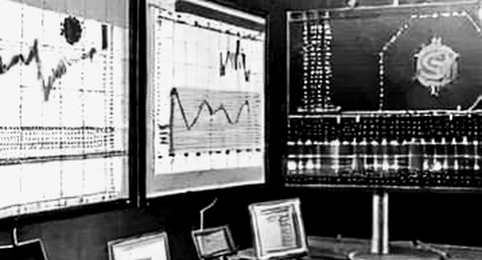
I pulled the BTC implied volatility term structure. Front-month ATM IV jumped from 65% to 82% within six hours. The risk reversal flip to a higher demand for puts. But here’s the nuance: the 9.5% Polymarket price for Iranian regime collapse didn’t move much. That tells me the market assigns a low probability to immediate escalation beyond this strike. It’s a measured response, not a full-scale war.
Yet the option market demands a premium for tail risk. The 25-delta put for next-week expiry traded at 3.5% of spot. That’s a 0.92% daily decay. The insurance is expensive. The crowd sees a geopolitical shock. I see a volatility surface mispricing the mean reversion. The fundamental damage to Iran’s nuclear capability is real, but the regime’s survival probability remains high. The 9.5% number is a liquidity game. The prediction market is thin. A $500,000 bet can move the line.
I know this because I’ve traded similar inefficiencies during the 2022 Terra collapse. When the data contradicts the narrative, you exploit the spread. The Yazd strikes are a catalyst, not a black swan. The market’s immediate panic — oil spiking 8%, gold touching $2,500, BTC dipping to $105,000 — is a liquidity event, not a structural shift.
Contrarian
The retail narrative is binary: either war or no war. That’s a cognitive error. The real trade is in the disconnection between physical and digital assets. Iran’s ability to retaliate via the Strait of Hormuz is a known risk. Oil will price it. But crypto is priced for a different set of assumptions. The bull market HODLers ignore tail hedging. They see the dip as a buying opportunity.
I disagree. The strikes target supply chain — not just Iranian nuclear infrastructure but global energy logistics. The same logic applies to crypto mining. If the US imposes secondary sanctions on Iranian crypto mining operations (which have been a source of revenue for the regime), hash rate could shift. The US has already linked crypto mining with national security. The Yazd strikes signal a willingness to attack upstream energy. That’s a new precedent.
Floor prices are illusions sold by desperate hope. The NFT market, still recovering from the 2024 crash, will collapse again if liquidity dries. The risk-off move benefits assets with genuine optionality — Bitcoin, ether, and tokenized gold (PAXG). The crowd will chase meme coins. I’ll short the speculative garbage.
Takeaway
The 9.5% Polymarket price is the anchor. It’s a hedge, not a prediction. Every trader should own that contract as a tail hedge — not because they believe the regime falls, but because the asymmetry favors a long volatility position. The market underestimates the second-order effects on crypto infrastructure. Iran is a small node, but the sanction ripple will hit mining and exchange compliance. Optionality is the shield against the black swan. The explosions in Yazd will echo in the options chain. Position accordingly.