The Iranian rial has been in freefall for weeks. The black market rate is a moving target, but the official one is a fiction maintained by a central bank that lost control of the narrative years ago. In the midst of this, Reza Pahlavi, the exiled crown prince, issued a public call for action. He framed it as a moment of national reckoning. From a distance, this looks like politics. From where I sit, it looks like a system undergoing structural entropy.
Let me be precise about what the prince is actually saying. He is not appealing to the military. He is not rallying street-level protesters. He is sending a signal to the international community that the Islamic Republic is in its terminal phase. The collapse of the rial is his evidence. The regime's pressure on civil society is his context. And the platform he chose to amplify this message is not a traditional news outlet, but Crypto Briefing. That last detail is not incidental. It tells me more about the situation than the prince's carefully chosen words.
Context: Iran's economy is a textbook case of sanctions-driven asphyxiation. The US has cut off the country's access to SWIFT, sanctioned its oil exports, and frozen its foreign reserves. The rial's depreciation is not a market correction; it's a structural collapse. The regime has tried capital controls, but the gray market for hard currency is booming. The official rate is a propaganda tool. The actual rate is whatever the local dealer says it is. When a government loses control of its currency, it loses control of its contract with the people. The social contract is not broken; it is void.
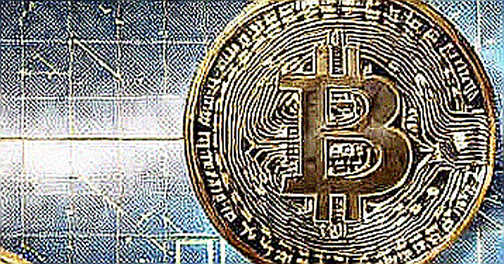
But here is what the mainstream coverage is missing. The crypto angle is not a footnote. It is the core. When a nation's financial system is weaponized against its citizens, the citizens will find alternatives. In Iran, that alternative is not gold bars hidden under mattresses. It is Bitcoin, USDT, and increasingly, an entire shadow economy built on digital assets. This is the 'secret network' of Iran, and it is growing faster than the regime can block it.
I have spent a decade in the forensic analysis of blockchain. I do not believe in the hype; I believe in the ledger. And when I see a country like Iran, I do not see political instability. I see a financial protocol that has been hacked by its own government. The regime is a centralized node with a single point of failure: the rial. The people are nodes in a decentralized network, seeking a new state to commit to. Crypto is the ultimate escape route.
Let's dissect the economics. The rial's collapse is not a variable; it is a constant. It has been declining for years. The only variable is the rate of decline. When the regime loses the ability to finance its subsidies, its military, and its revolutionary guard, the regime will not just fall; it will dissolve. The regime's internal pressure is mounting. The military is the largest economic actor, and it is increasingly dissatisfied with the civilian leadership. The IRGC is not loyal to the concept of a republic; it is loyal to its own business empire. When the rial crumbles, their empire crumbles with it. They will not tolerate that. This is the pressure that Pahlavi is talking about, but he is not identifying the real source.
My contrarian angle is this: The bulls, the crypto maximalists, will look at this and say, 'This is the great adoption story.' They will point to the soaring volume in Iranian crypto exchanges, the use of Tether for cross-border trade, and the rise of miners using cheap electricity. They will claim that crypto is the only freedom left. They are half-right. Crypto is the only tool left, but the tool is not a solution. It is a temporary band-aid. The Iranian crypto market is a store of value, not a currency. It is a savings account for people trying to preserve their wealth from hyperinflation. It is not a means of exchange for everyday goods. The infrastructure is too weak. The volatility is too high. The network is too unstable.
The real insight is that the rial's collapse is not a crypto adoption story. It is a state-currency death story. The Iranian people are not becoming crypto believers. They are becoming crypto refugees. They are fleeing a failing protocol (the rial) for a more stable one (Bitcoin). This is not a vote of confidence in crypto; it is a vote of no confidence in the state. The state will not survive this. The regime knows it. The IRGC knows it. The exiled prince knows it. The only ones who don't know it are the Western analysts who think a few billion dollars in sanctions relief will fix a decade of fiscal insanity.
What I am watching for is the secondary effect. When a country's currency collapses, it does not just affect the exchange rate. It affects the military's ability to fund its proxy. Hezbollah, the Houthis, and the militias in Iraq all rely on Iranian funds. The rial collapse will choke off their financial lifelines. This is not a monetary phenomenon; it is a geopolitical one. The regime, facing a financial cliff, has two choices: it can double down on its nuclear program as a bargaining chip, or it can lash out in a desperate attempt to rally nationalist sentiment. Both options are destabilizing. Both options will create volatility in global oil prices. Both options will push more capital into the 'safe haven' of crypto. The code does not care about geopolitics; it just tracks the value. And the value is fleeing the rial.
I have audited enough protocol failures to know that the 'aha' moment is rarely the protocol itself. It is the surrounding ecosystem. The Iranian regime is a protocol that is failing. The rial is a token that is going to zero. The people are the users, and they are forking. The 'fork' is Bitcoin, and the 'blockchain' is the international market. The central bank cannot stop this fork because it has no security measures. The state's code is broken, and the developers are the citizens. They built on sand; I built on skepticism. But in this case, even my skepticism is not deep enough. The sand is not just shifting; it is liquefying.
The takeaway is not 'buy Bitcoin.' The takeaway is 'trust the code.' The code is not a currency; it is a baseline. It is a measure of trust. When the state's ledger is broken, the people will find a new one. The regime in Tehran is not a political regime; it is a financial system that is insolvent. The insolvency is the crack. And through that crack, the light of the decentralized. Cold logic cuts through the noise of FOMO. The rial is dead. The question is not if the regime will fall; the question is what will fall with it. The code doesn't lie, but the regime does. And when the ledger of the state is filled with fake entries, the only truth left is the code. The only exit is the network. The only flag is the one not flying over Tehran. It is the flag of the open ledger, and it is already flying in the hearts of the people who are transacting in USDT, not in rials. That is the signal. That is the truth. The code doesn't lie.